Betting odds can feel like a code until you realise they are doing two jobs at once. They tell you how much a winning bet pays, and they express how likely the outcome is judged to be. Learn to read both messages and the whole activity becomes far more transparent.
This guide starts from the ground up: what odds represent, how bookmakers arrive at them, and how a price turns into a return. No jargon is assumed, and everything here connects directly to the calculator.
Odds as a Price
At the simplest level, odds are the price of a bet. In decimal terms, 3.00 means your stake is returned threefold if you win: two units of profit plus your stake. In fractional terms, 2/1 says the same thing. The bigger the number, the bigger the potential return and, usually, the less likely the outcome.
Odds as a Probability
Every price carries an implied probability, the chance the odds suggest. Decimal odds of 4.00 imply a 25% chance, because one divided by four is 0.25. This is the hidden half of the message, and it is explored fully in our implied probability guide.
Why Probabilities Add up to More Than 100%
If you convert every price in a market to a probability and add them, the total is more than 100%. That surplus is the bookmaker's margin, or overround, and it is how the book is built to make a profit over time. Our margin guide covers this in detail.
How Bookmakers Set Odds
Bookmakers combine statistical models, expert judgement and the weight of money being bet to arrive at a price, then adjust it as the event approaches. Odds are not a pure statement of probability; they are a commercial price that also reflects how bettors are behaving.
From Odds to Returns
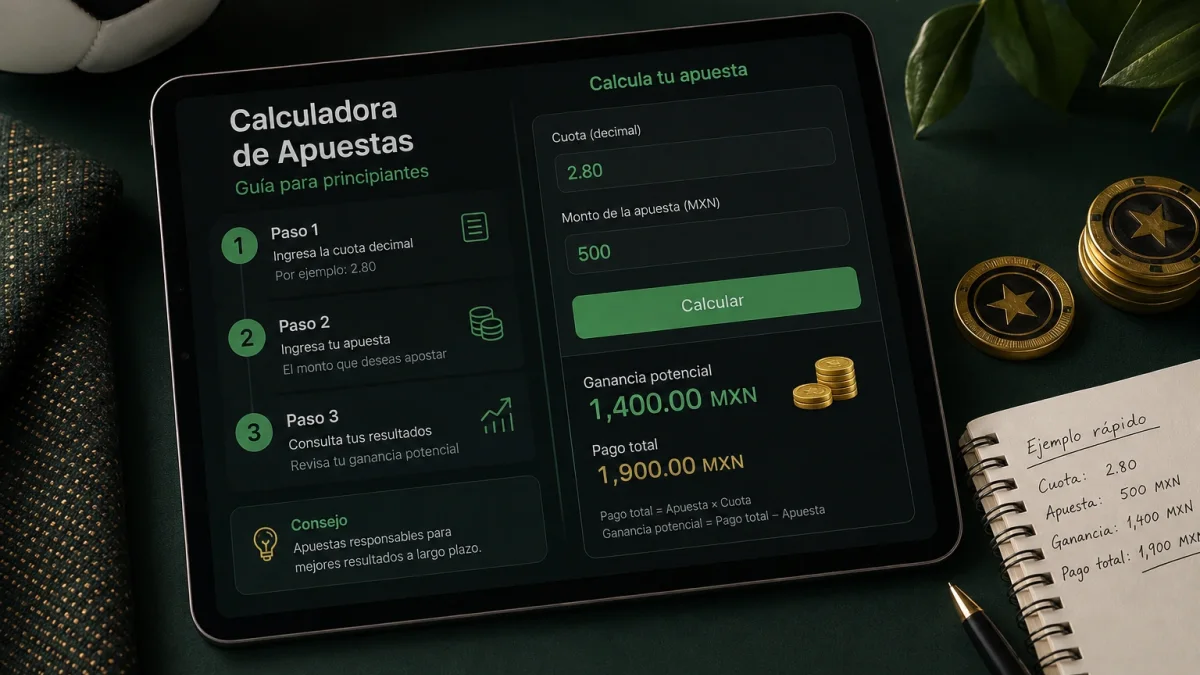
Turning a price into a return is straightforward: in decimals, multiply your stake by the odds for your total return, then subtract the stake for profit. For accumulators, multiply the legs together first. The Bet Calculator Betmentor does this across any bet type so you can focus on the selections, not the arithmetic.
Reading a Market with Confidence
Once you can see both the price and the probability in a set of odds, you can start to judge whether a bet offers value. That skill, comparing the offered price to your own estimate of the chance, is the foundation of value betting.